Warehouse Painting Services in Monmouth County: Protecting and Enhancing Industrial Facilities
A fresh coat of paint transforms a home, boosting curb appeal and protecting exterior surfaces from harsh weather or elevating interior living spaces. Yet, finding a dependable contractor can be challenging. Many homeowners have experienced poor communication, messy crews, surprise costs, or peeling paint within months.
Locating a skilled, dependable house painter requires a structured vetting process. By taking specific steps to source candidates, verify credentials, and compare detailed bids, you can ensure high-quality workmanship on your property.
Where to Source Vetted Local House Painters
The search begins by compiling a shortlist of qualified local professionals. Casting a wide net across multiple local channels helps identify contractors with established track records:
-
Google Business Profiles & Local Map Packs: Search for localized terms like “house painters near me” or “interior painters.” Review local listings, focusing on physical addresses, active operating hours, and photo galleries of recent projects.
-
Neighborhood Recommendations: Word-of-mouth referrals remain one of the most reliable sources of information. Ask neighbors who recently painted their homes about their experience, or consult local community message boards.
-
Specialty Paint Retailers: Stop by commercial paint counters such as Sherwin-Williams or Benjamin Moore rather than large home improvement warehouses. Counter staff work with local painting crews daily and can highlight which businesses consistently produce clean, professional work.
-
Local Real Estate Agents: Agents frequently rely on dependable painters to prep properties for market and often maintain lists of responsive tradespeople.
Verifying Credentials: Insurance and Licensing
Before inviting contractors to your home for estimates, make sure they meet core legal and insurance standards. This step protects you from liability and financial loss.
General Liability & Workers’ Compensation Insurance
Never permit an uninsured contractor on your premises. General liability coverage protects your property if a crew member causes accidental damage, such as tipping a ladder onto a window or spilling paint across hardwood floors. Workers’ compensation protects you if a painter is injured on-site. Without it, you could face personal liability for their medical expenses. Ask for a Certificate of Insurance (COI) sent directly from the provider rather than relying solely on a paper photocopy.
Trade Licensing and Business Registration
Depending on your state or municipality, painting contractors may need a specialized trade license or a general home improvement contractor registration. Check with your local licensing division or Department of Consumer Protection to confirm the business license is active and free of unresolved consumer complaints or administrative violations.
How to Read Online Reviews Objectively
Online ratings can sometimes be misleading. High average ratings are a good starting point, but the detailed feedback reveals how a contractor actually works. Keep these points in mind:
-
Consistency and Recency: Look for steady feedback over the past 6 to 12 months. An abrupt surge of five-star reviews followed by long silences may signal purchased reviews.
-
Attention to Prep Work: Quality painting depends on thorough surface preparation. Look for reviews mentioning power washing, scraping, caulking, drywall patching, and daily cleanup.
-
Handling of Customer Concerns: Every trade business encounters scheduling issues, weather delays, or minor touch-ups. Review how the contractor responds to negative feedback. A calm, professional, and resolution-oriented answer reflects strong operational maturity.
Hiring a Professional vs. DIY Painting
Deciding whether to hire a contractor or paint the home yourself comes down to balancing cost, time, and finish quality.
| Project Factor | Professional Painting Contractor | DIY (Do-It-Yourself) |
| Surface Preparation | Complete cleaning, scraping, mechanical sanding, priming, and caulking. | Often rushed to save time, leading to premature paint failure. |
| Tools & Equipment | Commercial airless sprayers, tall extension ladders, scaffolding, and heavy drop cloths. | Limited consumer-grade brushes, rollers, and rented ladders. |
| Project Timelines | Typically 2 to 4 business days with a full crew. | Multiple weekends or weeks, often disrupting living spaces. |
| Safety Precautions | Trained crews using ladder safety and harness systems. | Inherent fall risks, especially on two-story exteriors or high stairwells. |
| Finish Longevity | Uniform coats, straight cut lines, lasting 7 to 10+ years. | Inconsistent coverage and brush marks; often requires repainting sooner. |
| Workmanship Warranty | Written 1- to 3-year labor guarantees against peeling or blistering. | No protection; all corrections must be fixed out of pocket. |
Comparing Quotes Accurately
Price alone should not dictate your final decision. The lowest estimate often ends up being the most expensive after accounting for poor execution or sudden change orders.
-
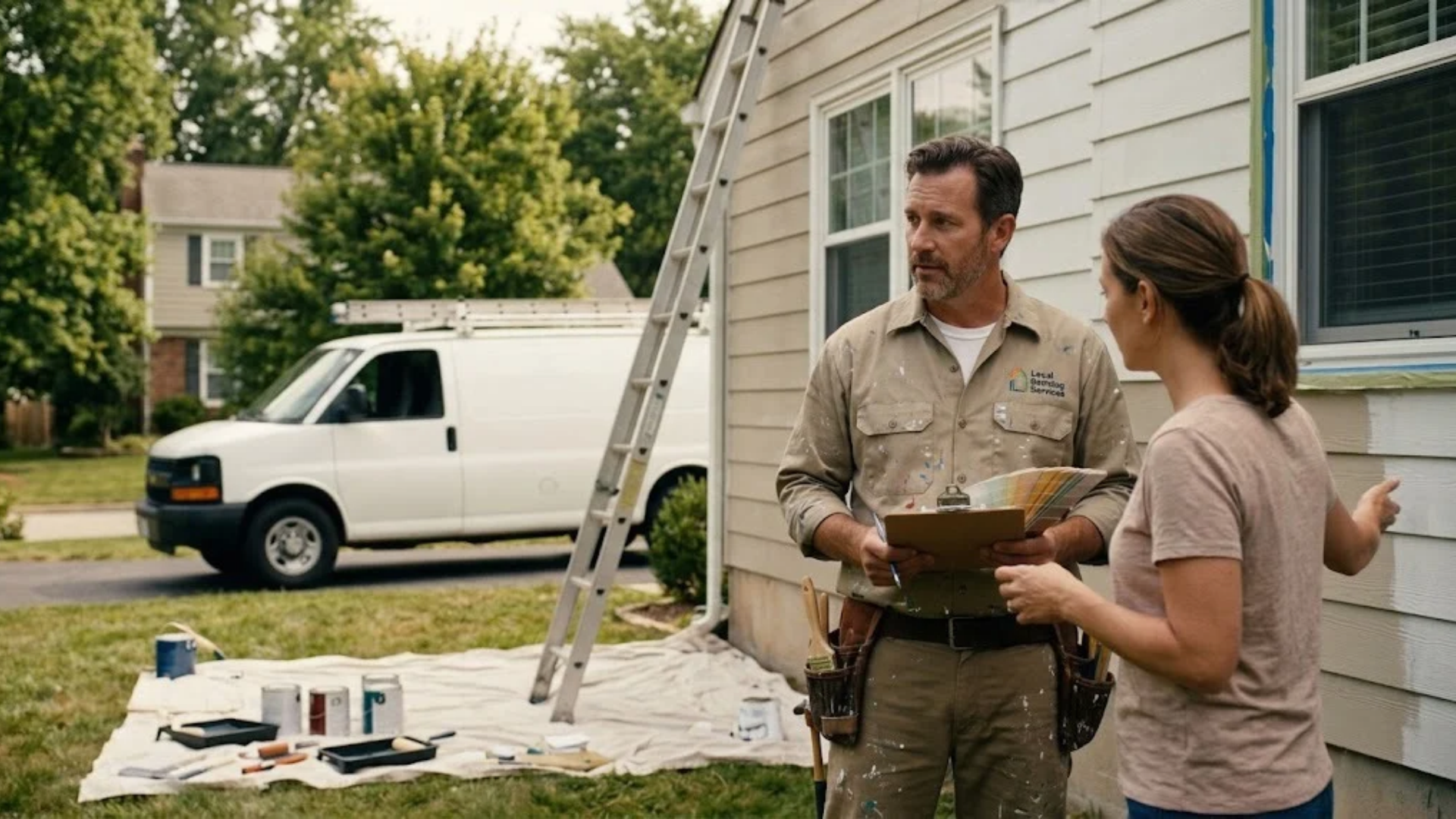
Get At Least Three In-Person Estimates: A reliable painter will never quote a major job solely over the phone or via satellite imagery. They need to inspect substrate conditions, substrate damage, access, and ceiling heights in person.
-
Review Material Specifications: Look for the specific paint brand, line, and finish included in the estimate. There is a substantial difference between builder-grade vinyl paint and premium exterior acrylic latex.
-
Verify the Number of Coats: Confirm whether the quote includes a primer coat plus two distinct finish coats, or merely a single coat over existing color.
-
Clarify Preparation Scope: The written proposal should detail every prep step, including pressure washing, pressure setting, scraping loose paint, filling gaps, and masking windows and landscaping.
Key Questions to Ask Prospective Painters
Interview each candidate to clarify how their team operates day-to-day:
-
“Do you use direct employees or third-party subcontractors?” Direct employees usually adhere more closely to standard operating procedures, while subcontractors can sometimes vary in quality.
-
“What is your daily cleanup routine?” Reliable crews pack up gear, vacuum interior dust, protect furnishings, and secure hazardous solvents every afternoon before leaving.
-
“What is your payment structure?” Reputable companies typically ask for an initial deposit of 10% to 33%, with additional milestones and a final payment due only after completion.
-
“What does your written warranty cover?” Make sure you understand the difference between the paint manufacturer’s product warranty and the contractor’s labor warranty.
Red Flags to Watch Out For
-
Demands for Substantial Cash Upfront: Contractors asking for 50% or more upfront, especially in cash, may be facing financial instability.
-
Vague Verbal Proposals: Any bid written on the back of a business card or delivered solely via text message should be dismissed. Insist on a formal, itemized contract.
-
No Fixed Address or Marked Vehicles: Established businesses maintain professional visibility and verifiable physical presences.
-
Hesitation to Share Recent References: If a painter cannot promptly supply contact info for three clients from the past six months, look elsewhere.
Completing the Final Walk-Through
First and foremost, do not release the final payment until you perform a comprehensive daylight walk-through alongside the lead painter. This is crucial because natural sunlight instantly exposes missed spots, unsightly runs, and roller marks that dim indoor bulbs typically conceal.
During the inspection, walk through each room or around the exterior armed with a roll of blue painter’s tape, so that you can clearly flag any surface requiring touch-ups. In addition to the walls, verify that windows open smoothly without sticking to fresh paint, confirm that door edges are cleanly coated, and make sure all hardware remains entirely free of overspray.
Ultimately, taking the time to research candidates, verify credentials, and compare written proposals eliminates the guesswork from hiring a house painter. Consequently, investing this effort upfront shields your property from costly mistakes, keeps the entire project running on track, and above all, ensures a durable, showroom-quality finish that lasts for years to come.
Other Related Post:
How Much Does It Cost to Hire Professional House Painters in NJ?
Warehouse Painting Services in Monmouth County: Protecting and Enhancing Industrial Facilities