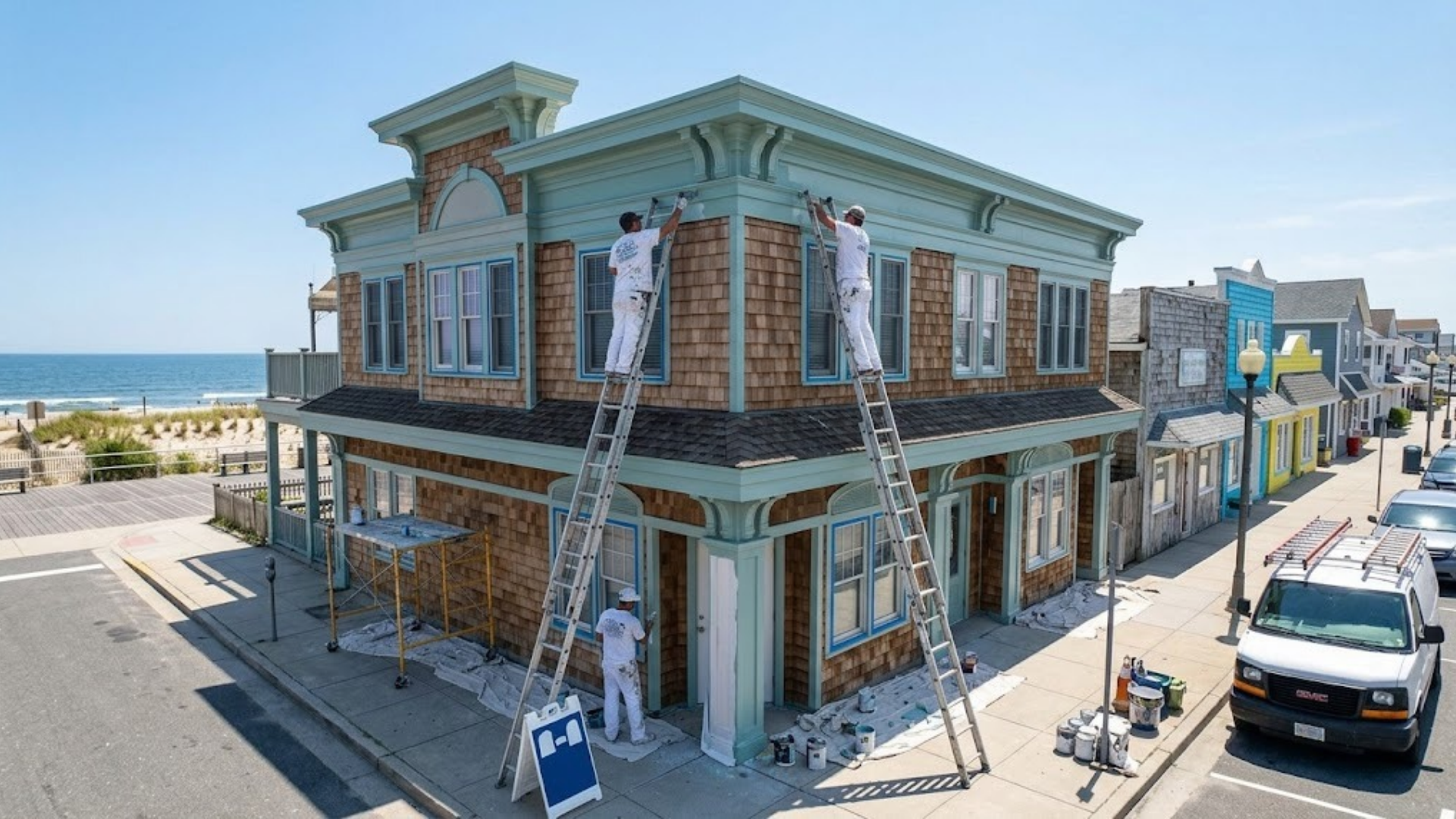
Every coastal homeowner knows the unmistakable charm of life in Monmouth County. From the Victorian architecture of Ocean Grove and classic beach cottages in Manasquan to sprawling estates in Colts Neck and established colonial neighborhoods in Freehold, homes here showcase diverse architectural beauty. However, living in this vibrant region of Central New Jersey comes with a distinct environmental challenge: persistent exposure to coastal weather.
An exterior paint job is often treated as a simple aesthetic refresh, but in reality, it serves as the frontline defense against moisture infiltration, rot, and structural decay. Knowing exactly when to repaint can mean the difference between routine maintenance and thousands of dollars in avoidable siding and trim replacements.
Why Monmouth County Weather Accelerates Exterior Paint Wear
Monmouth County sits in an active coastal transition zone, exposing properties to an unforgiving mix of weather conditions throughout the year. Homes positioned close to the Atlantic—such as those in Asbury Park, Spring Lake, and Long Branch—bear the constant brunt of salt-laden ocean air. Airborne salt crystals act like fine sandpaper against paint surfaces, chemically destabilizing acrylic polymers and degrading topcoats much faster than inland climates.
Moving west toward towns like Holmdel and Marlboro, inland homes face their own set of environmental stressors. New Jersey’s dramatic freeze-thaw cycles force wood, stucco, and composite siding to expand and contract repeatedly. As building materials flex, rigid, sun-baked paint films lose elasticity, crack, and fail. Combined with humid, sweltering mid-Atlantic summers and heavy winter nor’easters, exterior paint in this region degrades noticeably faster than the national average.
Top 6 Clear Warning Signs It’s Time to Repaint
Recognizing paint failure before water infiltrates the underlying framing is critical. A quarterly perimeter inspection around your house helps spot these primary warning indicators:
-
Peeling, Cracking, or Flaking: The clearest sign of adhesive breakdown. Once paint curls away from the siding, exposed areas allow rainwater to soak directly into the substrate.
-
Chalking Residue: Run a dry hand across your home’s southern-facing siding. If a fine, chalk-like powder coats your palm, UV radiation has oxidized the paint binders, meaning color fading and finish failure have already begun.
-
Cracked or Hardened Caulk: Caulk lines along window casings, door frames, and corner boards shrink and split over time, turning critical seams into direct entry points for water.
-
Persistent Mildew and Black Mold: The Jersey Shore’s humidity often fuels organic growth on shaded elevations. When dark mold returns shortly after a wash, moisture has likely penetrated beneath the paint layer.
-
Exposed Wood or Siding: Any bare spot left unprotected invites wood-boring insects, fungal rot, and warping within a single rainy season.
-
Premature Fading and Patchy Discoloration: Sun-drenched elevations fade unevenly. When the paint turns noticeably dull and blotchy, the protective film has thinned out and can no longer shield against UV radiation.
Exterior Repainting Timelines by Siding Material
How often you need to repaint depends heavily on your home’s cladding and its proximity to the ocean. The table below outlines general repaint schedules alongside realistic intervals adjusted for Monmouth County’s coastal conditions:
| Siding Material | Standard Climate Lifespan | Monmouth County Adjusted Lifespan | Primary Local Threat |
| Cedar Shingle & Clapboard | 5 – 7 Years | 3 – 5 Years | Salt spray, coastal moisture absorption, wood rot |
| Stucco & Masonry | 7 – 10 Years | 5 – 7 Years | Wind-driven rain, hairline settlement cracks, efflorescence |
| Fiber Cement (e.g., HardiePlank) | 10 – 15 Years | 8 – 12 Years | Intense UV exposure, caulk line failure at plank joints |
| Aluminum Siding | 5 – 8 Years | 4 – 6 Years | Heavy surface oxidation, chalking, paint delamination |
| Exterior Wood Trim & Fascia | 3 – 5 Years | 2 – 4 Years | Gutter overflow, wind exposure, direct sun degradation |
Cedar shingles and natural wood clapboards are common across Monmouth County, but they are also the most moisture-absorbent. If maintenance on wood siding is neglected, moisture quickly becomes trapped under failing paint, causing the boards to cup, curl, or rot from the inside out.
When Is the Best Time of Year to Repaint in Central New Jersey?
Timing your painting project properly ensures the fresh coating forms a durable, long-lasting chemical bond. Premium exterior acrylic latex paints require consistent temperatures and moderate humidity levels to cure properly.
The Spring Window (May to June)
As the region thaws and morning frost risks disappear, late spring provides steady daily temperatures ranging between 60°F and 75°F. This window allows painters to tackle winter moisture damage early, though projects must be coordinated around unpredictable spring showers.
The Early Autumn Sweet Spot (September to Mid-October)
Early autumn is generally regarded as the ideal season for exterior painting in Central New Jersey. Humidity levels drop substantially, daytime temperatures hover comfortably between 65°F and 80°F, and rainfall tends to be more predictable than in spring. The lower dew points allow latex and elastomeric coatings to dry uniformly without moisture entrapment.
The Cold-Weather Off-Season (November through March)
Painting between late November and March carries high risks in Monmouth County. While specialized modern paints can cure down to 35°F, sharp overnight drops below freezing disrupt film formation, leaving coatings brittle, uneven, and prone to premature peeling.
The Hidden Cost of Delaying an Exterior Repaint
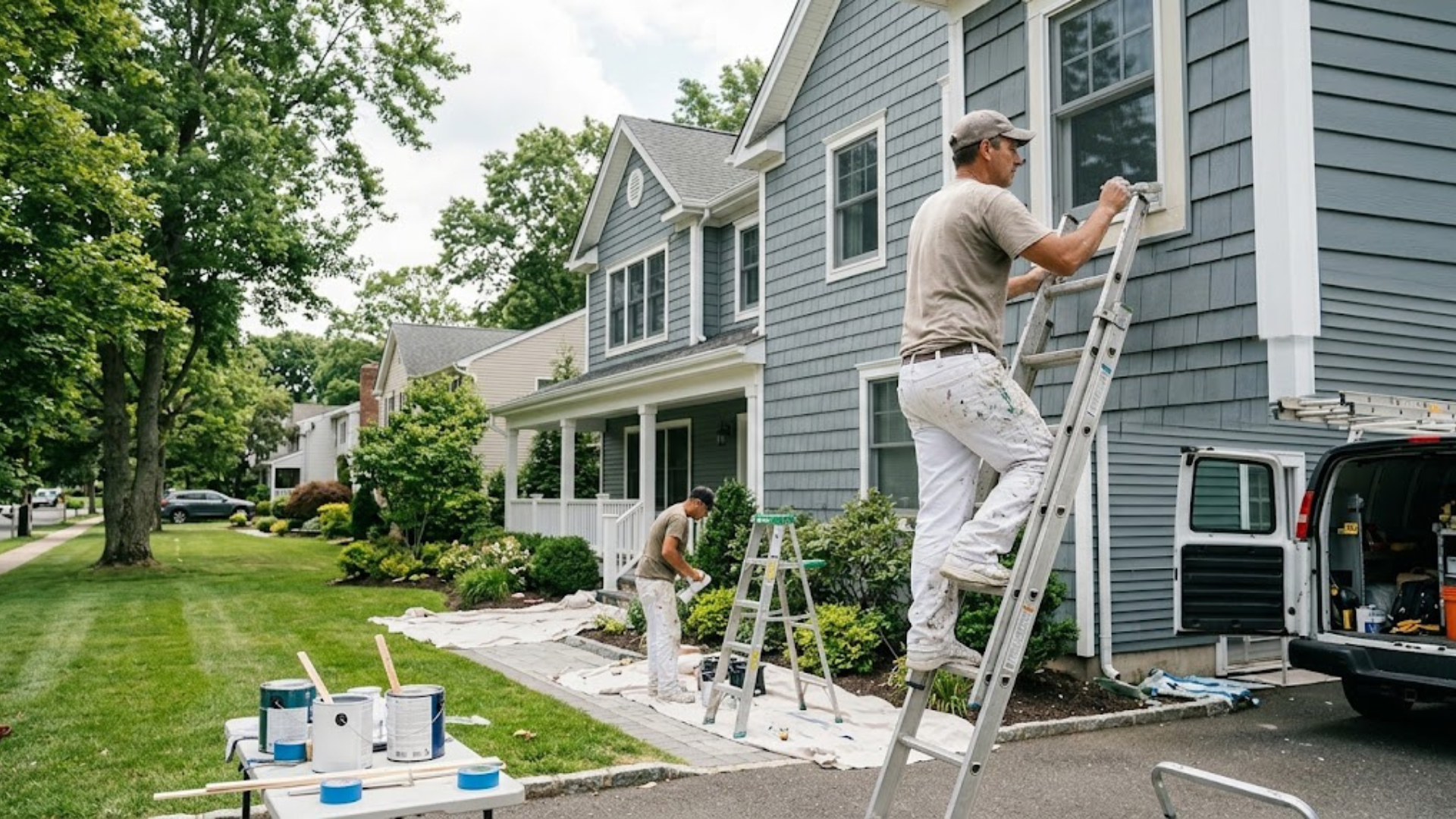
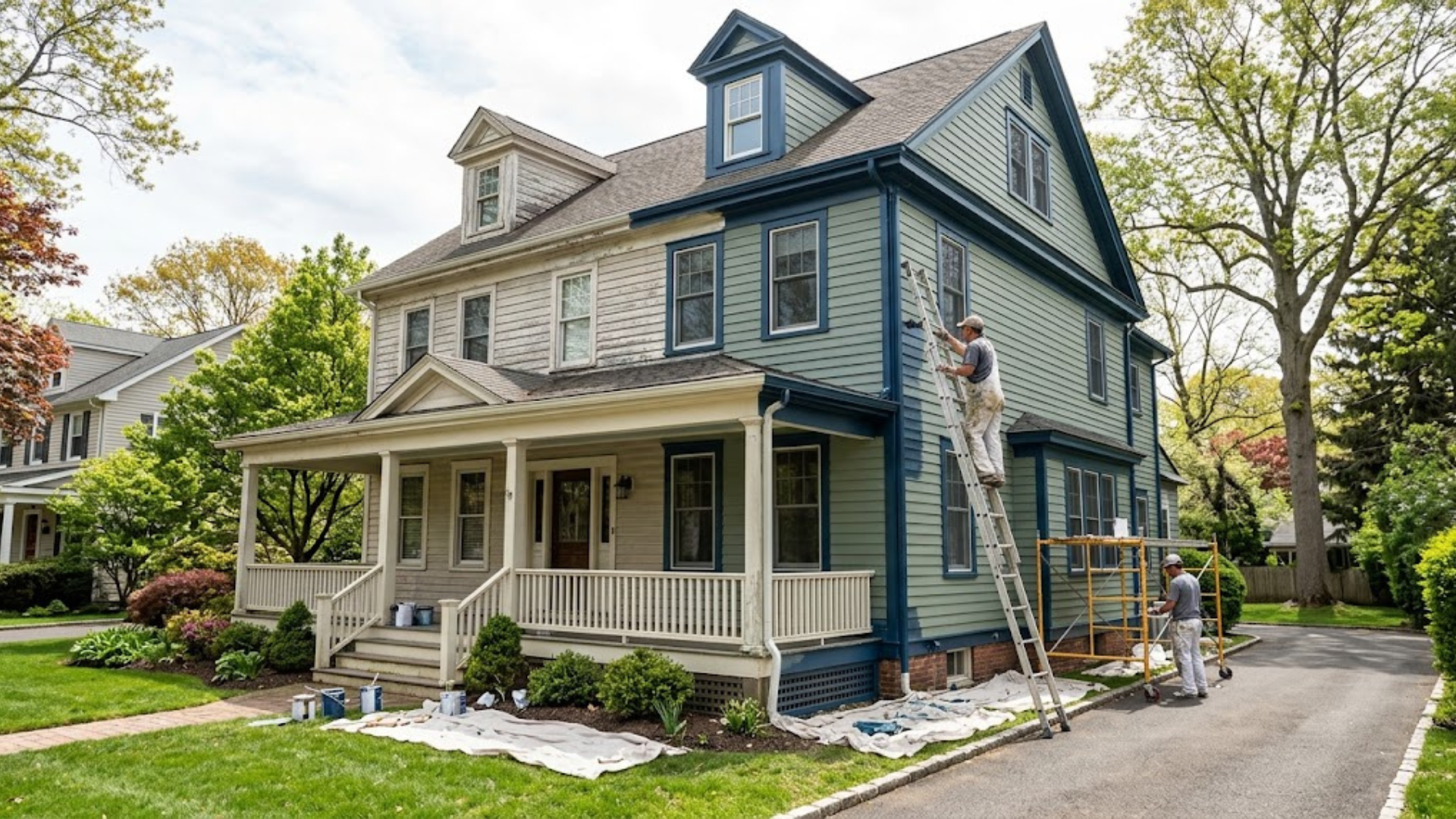
Postponing an exterior paint project often turns out to be a costly miscalculation. When paint is still mostly intact, repainting primarily involves routine surface prep: gentle power washing, spot-scraping, spot-priming, and applying two protective topcoats.
However, allowing paint to deteriorate to the point of widespread flaking and bare wood exposure shifts the scope from simple maintenance to expensive restoration. Contractors must perform intensive hand-scraping, complete orbital sanding, lead-safe abatement on older properties, and extensive carpentry repairs to replace rotted corner boards, soft sills, and warped siding. Timely repainting keeps maintenance costs low and helps avoid major construction expenses.
How to Conduct a 10-Minute Home Exterior Audit
Homeowners can easily evaluate their home’s exterior condition each season using this simple five-step walk-around protocol:
-
Start with Southern and Western Exposures: These facades endure the heaviest daily UV punishment and usually fail 1 to 2 years earlier than northern walls.
-
Execute the Hand Swipe Test: Wipe a dark glove or bare palm across the mid-height siding to check for chalky paint breakdown.
-
Inspect Seams and Miters: Check vertical seams where exterior trim meets siding; look for split, dried-out caulk lines or open gaps.
-
Probe Critical Moisture Points: Use a blunt putty knife to gently test window sills, door jamb bases, and bottom siding courses for spongy, moisture-compromised wood.
-
Check Ground Clearances: Ensure bottom siding panels and foundation trim have at least six inches of clear space above mulch, topsoil, and surrounding garden beds.
Curb Appeal and Property Value in Monmouth County
Monmouth County remains one of the state’s most sought-after real estate markets. Whether dealing with historical properties in Fair Haven or shorefront homes in Belmar, exterior curb appeal strongly shapes initial impressions. Fresh, professionally applied exterior paint reliably yields a return on investment of over 100% when selling. Aside from visual appeal, a well-maintained exterior reassures home inspectors and prospective buyers that the property has been properly cared for and shielded from water damage.
Essential Questions to Ask Before Hiring a Monmouth County Contractor
Selecting the right professional contractor ensures your investment holds up against the local climate:
-
Are you registered with the state of New Jersey as a Home Improvement Contractor (HIC)? Verify that the contractor holds an active license and carries comprehensive general liability and workers’ compensation coverage.
-
What surface preparation steps are included in your quote? Quality exterior painting is roughly 75% prep work. Ensure their scope includes pressure washing, scrape-and-feather sanding, caulking, and oil- or acrylic-based stain-blocking primers.
-
Which paint products do you recommend for our location? Reputable Monmouth County painters typically rely on commercial-grade, 100% acrylic latex or elastomeric finishes specifically formulated to handle coastal humidity and salt air.
-
Do you provide a written warranty covering both materials and labor? A dependable contractor should stand behind their artistry with a clear, written warranty lasting at least two to three years against peeling, blistering, and flaking.
Conclusion: Protect Your Home Before the Next Season Hits
Your home’s exterior paint is far more than a decorative feature—it is an essential defensive barrier against coastal winds, airborne salt, and humid mid-Atlantic weather. Keeping a close eye on paint degradation and addressing chalking, cracking, and thinning finishes early will keep your siding protected, preserve your home’s structural integrity, and maintain standout curb appeal all year round.
Salt air, high humidity, and winter nor’easters can turn small paint flaws into costly structural repairs. Protect your investment before seasonal damage sets in.
[Schedule Your Free On-Site Exterior Paint & Moisture Assessment Today]
Partner with Monmouth County’s trusted, licensed exterior painting specialists. Call now or book online for a detailed, no-obligation estimate.
Other Post:
Exterior Commercial Painting Near Me: Why Choosing the Right Contractor Matters
The Cost of Commercial Painting Projects in NJ: What Business Owners Should Know