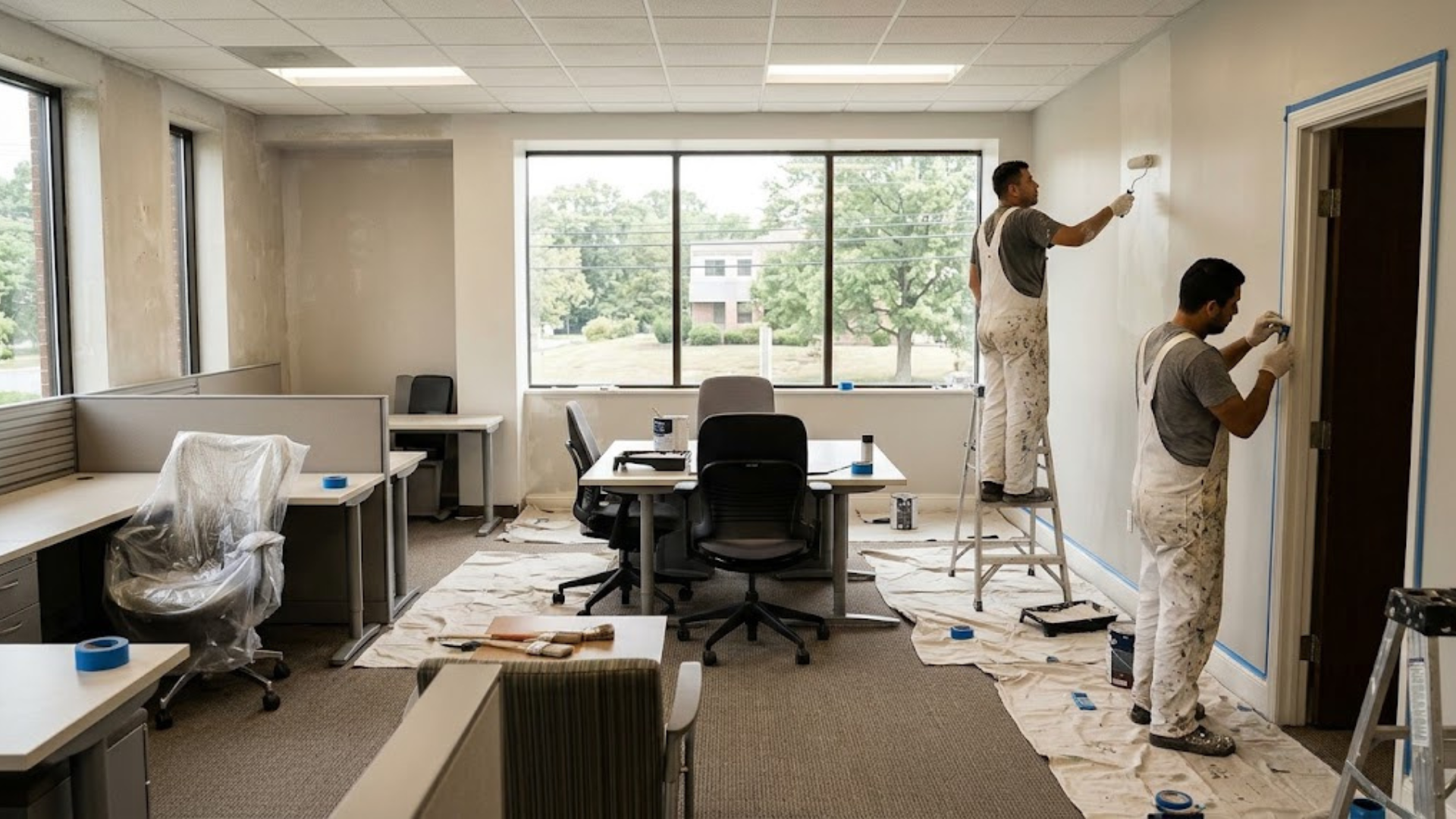
First impressions in commercial real estate form within seconds of entering a facility. For businesses operating throughout Monmouth County, New Jersey, the condition of an office interior speaks directly to clients, partners, and top-tier job candidates before a single conversation takes place. Faded tones, scuffed baseboards, and outdated wall colors quietly signal neglect, whereas crisp lines, cohesive palettes, and flawless wall finishes communicate stability, attention to detail, and modern business acumen.
Investing in high-end commercial office painting is not merely an aesthetic expense; it is a direct operational asset. As modern workplace standards shift toward collaborative, employee-centric environments, office architecture must keep pace. A meticulously painted workspace revitalizes tired interiors, protects commercial drywall from persistent daily wear, and delivers a proven return on investment by elevating the perceived value of your enterprise.
Why Monmouth County Businesses Need Professional Office Painting
The commercial corridor of Monmouth County—stretching from the bustling medical facilities in Freehold to the vibrant creative and corporate firms in Red Bank, Holmdel, and Wall Township—is intensely competitive. Maintaining an edge requires an immaculate physical workplace tailored to modern commercial demands.
-
Corporate Brand Reinforcement: A custom paint application aligns corporate colors, textures, and architectural accents with public brand identity.
-
Commercial Asset Defense: Specialized commercial coatings shield busy corridors and conference rooms against continuous impacts from rolling office chairs, utility carts, and foot traffic.
-
Tenant Improvement Compliance: Professional execution ensures commercial tenants meet strict building lease terms, return-of-premises clauses, or tenant improvement (TI) allowances.
-
Employee Morale and Focus: A clean, vibrant environment actively reduces optical fatigue, enlivens dull cubicle farms, and cultivates a sense of pride across your workforce.
Color Psychology: Choosing the Right Palette for Work Productivity
Selecting office paint colors involves far more than subjective taste; it requires an understanding of environmental psychology. Wall colors directly impact cognitive load, stress levels, and interpersonal dynamics throughout the workday.
Strategic Color Implementation
In focused workstations, saturated reds or stark bright whites often cause visual fatigue, headaches, and tension. Instead, low-wavelength tones like sage greens and soft coastal greys foster cognitive endurance, clear thinking, and emotional balance. For creative hubs or tech agencies in towns like Asbury Park and Shrewsbury, subtle golden-yellow or warm terracotta accent walls can stimulate spontaneous brainstorming without overwhelming the senses.
Commercial Color & Finish Selection Matrix
| Workspace Area | Recommended Coating & Sheen | Optimal Color Direction | Functional & Psychological Benefit |
| Reception & Lobbies | Satin or Eggshell Finish | Slate Blue, Greige, Warm Neutral | Builds immediate client trust, projects stability, and offers effortless surface cleaning. |
| Open-Plan Workstations | Low-Lustre / Eggshell | Muted Sage, Cool Grey, Soft Taupe | Minimizes glare, lowers cognitive stress, and supports long hours of analytical computer work. |
| Executive Boardrooms | Premium Matte or Velvet | Deep Charcoal, Classic Navy, Espresso | Eliminates reflective hotspots during presentations while conveying corporate prestige. |
| Cafeterias & Break Rooms | Semi-Gloss (Moisture-Tolerant) | Light Peach, Warm Terracotta, Pale Gold | Encourages social interaction, lifts workplace mood, and resists food or coffee splatters. |
| High-Traffic Corridors | Scuff-Resistant Semi-Gloss | Medium Charcoal, Oatmeal, Crisp White | Withstands heavy impacts, prevents fingerprint stains, and allows repeated sanitization. |
The Value of Low-VOC and Eco-Friendly Commercial Paints
Interior air quality directly impacts workplace wellness, productivity, and OSHA compliance. Conventional commercial paints historically relied on high levels of Volatile Organic Compounds (VOCs), which release pungent chemical off-gassing into interior air ducts for weeks after application.
Modern commercial facilities throughout Monmouth County require zero-VOC and ultra-low-VOC coatings, such as Benjamin Moore Eco Spec or Sherwin-Williams ProMar 200 Zero VOC. These formulas eliminate severe chemical odors, meaning painting projects can occur without triggering headaches, eye irritation, or allergy flare-ups among personnel. Switching to eco-conscious paints ensures your facility supports corporate ESG sustainability standards while safeguarding the everyday health of your staff.
Minimizing Operational Downtime: Flexible Commercial Scheduling
Every business owner knows that commercial downtime cuts straight into profitability. Professional commercial painting contractors operate with logistics designed to prevent standard business interruptions.
-
Phased Sectional Execution: Painting is planned zone by zone or wing by wing, enabling departments to shift temporarily without losing operational momentum.
-
Dedicated Night and Weekend Windows: Crews conduct full surface prep, masking, and topcoat applications from Friday evening through Sunday, leaving spaces fully cured and clean for Monday morning.
-
Rigorous Dust and Fume Containment: Technicians deploy zippered poly-sheeting barriers, negative air scrubbers, and HEPA-filtered vacuums to shield delicate server rooms and computers from sanding debris.
-
Rapid-Cure Paint Technologies: Utilizing fast-drying, low-odor commercial coatings allows freshly painted meeting spaces to be reoccupied just hours after the final coat.
Surface Preparation: What Sets Professional Contractors Apart
The longevity of a commercial paint job depends almost entirely on the preparatory steps taken before paint cans are opened. High-caliber contractors execute exhaustive preparation protocols to ensure optimal adhesion:
-
Level 5 Drywall Repair: Skim-coating, mudding, and patching structural settle cracks, doorknob impacts, and anchor holes until surfaces are uniformly smooth.
-
Degreasing and Decontamination: Stripping oils, grease, and residue from door jambs, kitchenette drywall, and elevator lobbies to prevent premature paint peeling.
-
Perimeter Caulking & Sealing: Applying commercial-grade elastomeric sealants along baseboards, door trims, and window sills to eliminate drafts and create neat lines.
-
Targeted Stain Sealing: Applying shellac- or alkyd-based bonding primers over existing water stains, smoke marks, or stubborn marker pen lines to stop them from bleeding through fresh topcoats.
Selecting the Right Commercial Painting Contractor in Monmouth County
Partnering with an inexperienced painter risks prolonged timelines, inferior results, and legal liability. Commercial property managers should vet candidates thoroughly before signing a contract.
Essential Vetting Checklist
-
Holds current, verified New Jersey business licenses and home improvement/commercial credentials.
-
Furnishes an active Certificate of Insurance (COI) detailing a minimum of $2,000,000 in General Commercial Liability and active Workers’ Compensation coverage.
-
Provides a track record of completed projects across Monmouth County commercial properties, backed by direct corporate references.
-
Delivers a comprehensive written proposal with clear scopes, precise brand-name paint specifications, and explicit warranty coverage.
Regional Factors Along the Jersey Shore
Monmouth County’s proximity to coastal salt air and seasonal humidity demands tailored knowledge. An experienced local contractor understands how coastal moisture influences curing windows, and selects mildew-resistant, scuff-resistant paint chemistries that preserve the building’s interior integrity across hot summers and cold winters.
Estimating the Cost of Commercial Painting
Commercial painting projects are budgeted per square foot, taking into account wall condition, substrate texture, architectural height, and project complexity.
While basic commercial repaints can range from standard per-square-foot baseline rates up to higher tiers for intricate trim details and acoustic ceiling coatings, the true financial metric is total lifecycle cost. Opting for cheap residential paint requires re-application within two to three years. In contrast, investing in high-grade, scrubbable commercial coatings (such as Benjamin Moore Scuff-X) extends the aesthetic life of the facility out to seven years or more, cutting maintenance costs in half over time.
Long-Term Maintenance: Protecting Your Corporate Paint Investment
-
Retain Labeled Touch-Up Stock: Store leftover paint formulas in sealed, clearly labeled containers within climate-controlled utility closets for swift touch-ups.
-
Use Mild Cleaning Protocols: Wash walls using microfiber towels and neutral detergents rather than caustic, solvent-heavy degreasers that break down paint binders.
-
Install Wall Protection: Place clear polycarbonate corner guards on high-traffic drywall returns and mount chair-rail moldings in conference rooms to block chair backs.
Elevate Your Business with Monmouth County’s Commercial Experts
A clean, thoughtfully planned workplace enhances your team’s focus, strengthens company culture, and establishes undeniable authority in front of every visiting client. Upgrading your commercial walls provides an immediate boost to your company’s image and long-term asset value. Schedule an on-site commercial walkthrough with Monmouth County’s trusted painting professionals today to craft a workspace that commands respect and drives long-term business success.
Other Post:
Exterior House Painting in Monmouth County: When Is It Time to Repaint?
Best Time of Year for Commercial Exterior Painting in Monmouth County
How Commercial Painting Improves Warehouse Safety in Monmouth County