In Ocean County, commercial real estate is highly competitive. Therefore, the physical appearance of an office building matters immediately. A well-maintained facility conveys authority before any meeting begins. Conversely, deferred maintenance harms credibility. This rule applies to corporate parks along the Garden State Parkway. Similarly, it holds true for professional practices in downtown Toms River. A strategic commercial painting plan preserves structural equity. At the same time, it elevates your corporate brand and builds a productive work environment.
Why First Impressions Matter: The Value of Commercial Painting in Ocean County
First impressions decisively shape commercial outcomes. For instance, prospective clients notice exterior upkeep right away. In addition, prospective tenants evaluate building condition upon arrival. High-quality curb appeal creates immediate trust. Furthermore, clean interior corridors signal operational excellence. On the other hand, peeling paint implies organizational neglect. Scuffed walls and water stains also erode customer confidence. Over time, these visual flaws decrease overall property market value.
Consequently, commercial repainting is an essential investment. It serves as an active branding strategy. Moreover, it functions as a proven tenant-retention tool. Modernizing lobby areas creates an upscale business environment. Meanwhile, refreshing conference suites makes meetings feel professional. Business hubs like Lakewood, Brick, and Forked River require strong visual presentation. Therefore, crisp wall surfaces protect commercial occupancy rates. Ultimately, premium aesthetics justify higher square-foot lease rates across Ocean County.
Coastal Climate Challenges: Why Ocean County Facilities Require Specialized Coatings
Commercial buildings along the Jersey Shore face extreme weather conditions. Standard interior and exterior paints are simply not enough. In particular, coastal structures endure harsh environmental elements every season. The Atlantic Ocean and Barnegat Bay produce high humidity and heavy sea mist. In fact, airborne salt settles constantly onto exterior surfaces. These salt crystals attract moisture into the walls. As a result, the chemical binders in regular exterior paints break down quickly.
Additionally, summer brings intense ultraviolet radiation. Winter storms and Nor’easters follow with freezing winds. Consequently, exterior substrates experience rapid thermal expansion. Unprotected masonry and stucco will crack under this stress. Water then enters the cracks and causes severe wall damage. For this reason, facilities need premium moisture-barrier primers. Furthermore, they need elastomeric coatings with superior elasticity. These specialized coatings bridge surface cracks cleanly. They stop wind-driven rain, yet they still let trapped interior moisture escape safely.
Core Commercial Painting Services for Professional Facilities
Every commercial property contains multiple architectural surfaces. Thus, a professional painting project requires varied application methods:
-
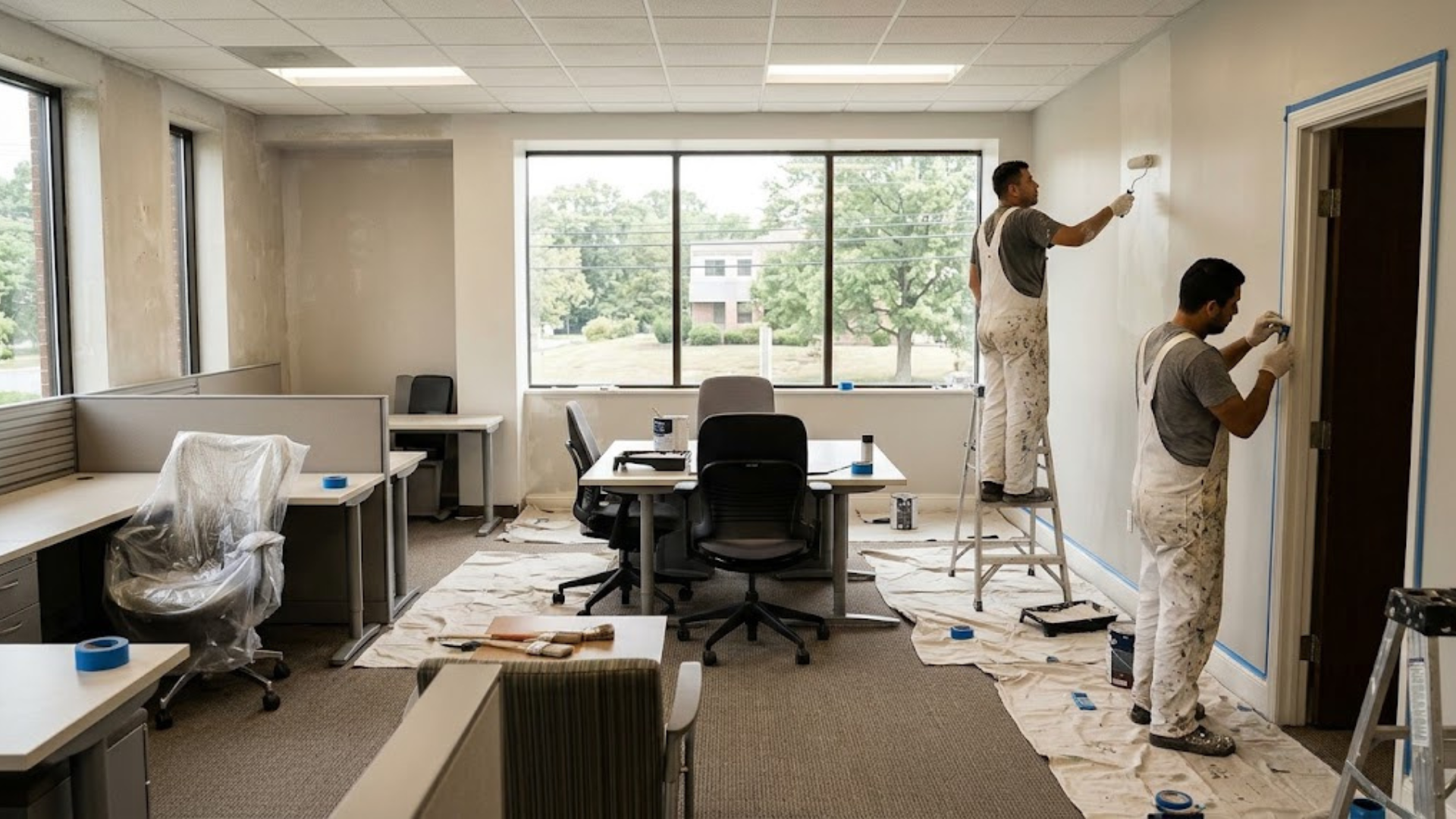
Executive Office Suites & Boardrooms: Technicians apply premium, low-glare paints with rich pigments. In addition, they create sharp accent walls that display corporate brand colors.
-
High-Traffic Common Areas: Crews coat busy hallways and stairwells with scuff-resistant paint. Therefore, these high-use surfaces endure heavy foot traffic without staining.
-
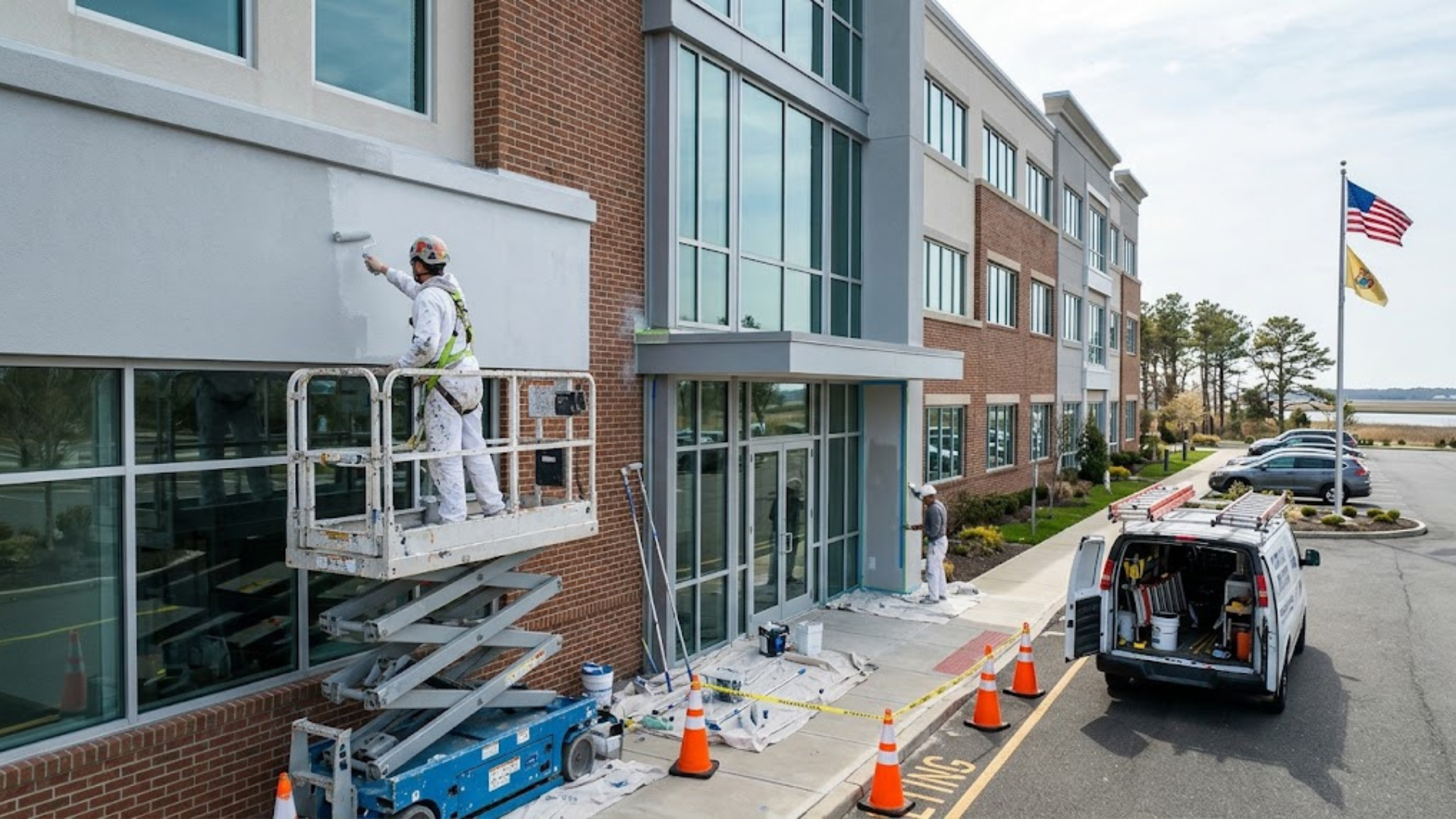
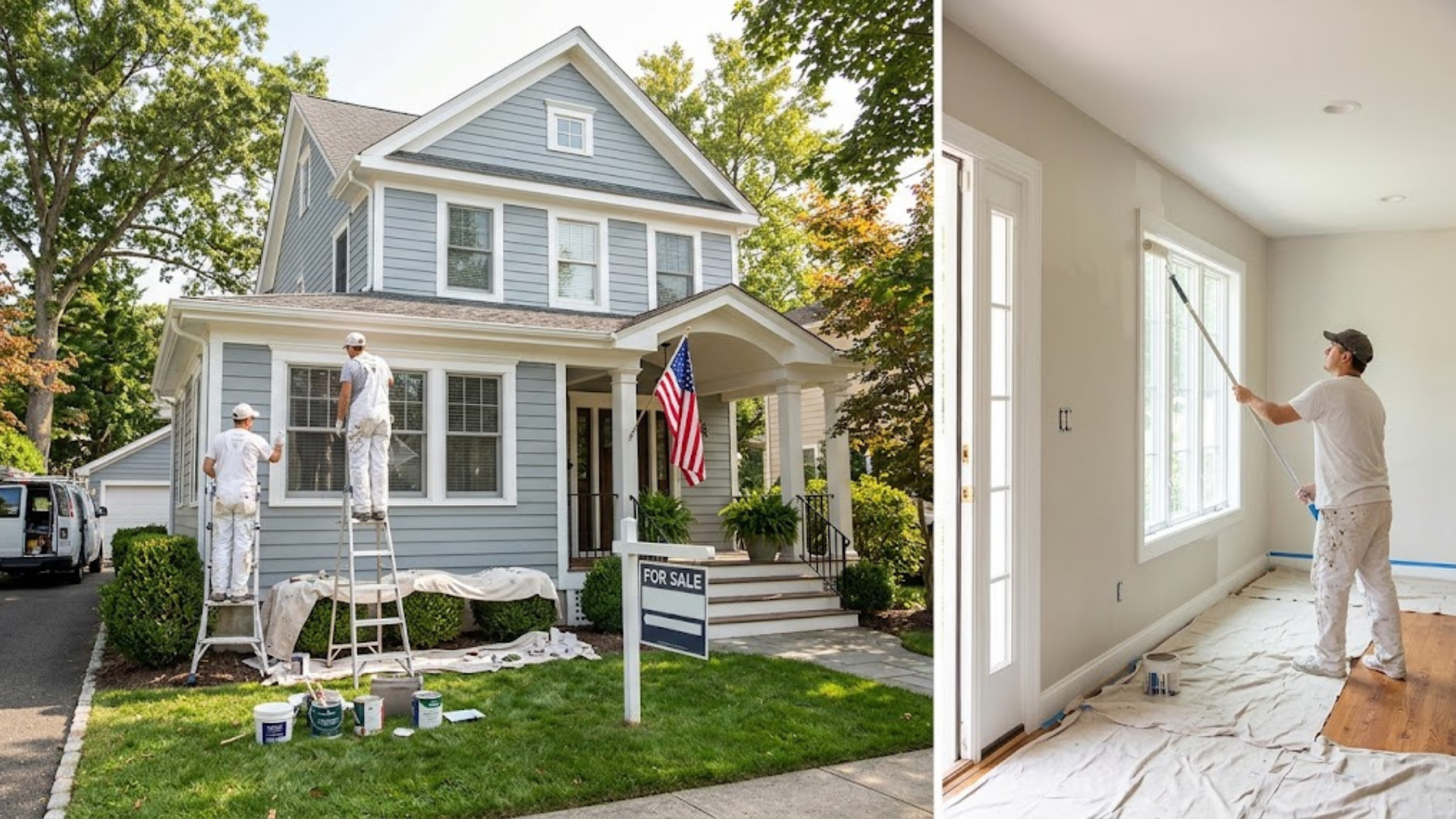
Architectural Exterior Facades: Painters apply weather-resistant coatings to stucco, brick, and split-face block. As a result, exterior surfaces resist coastal moisture penetration.
-
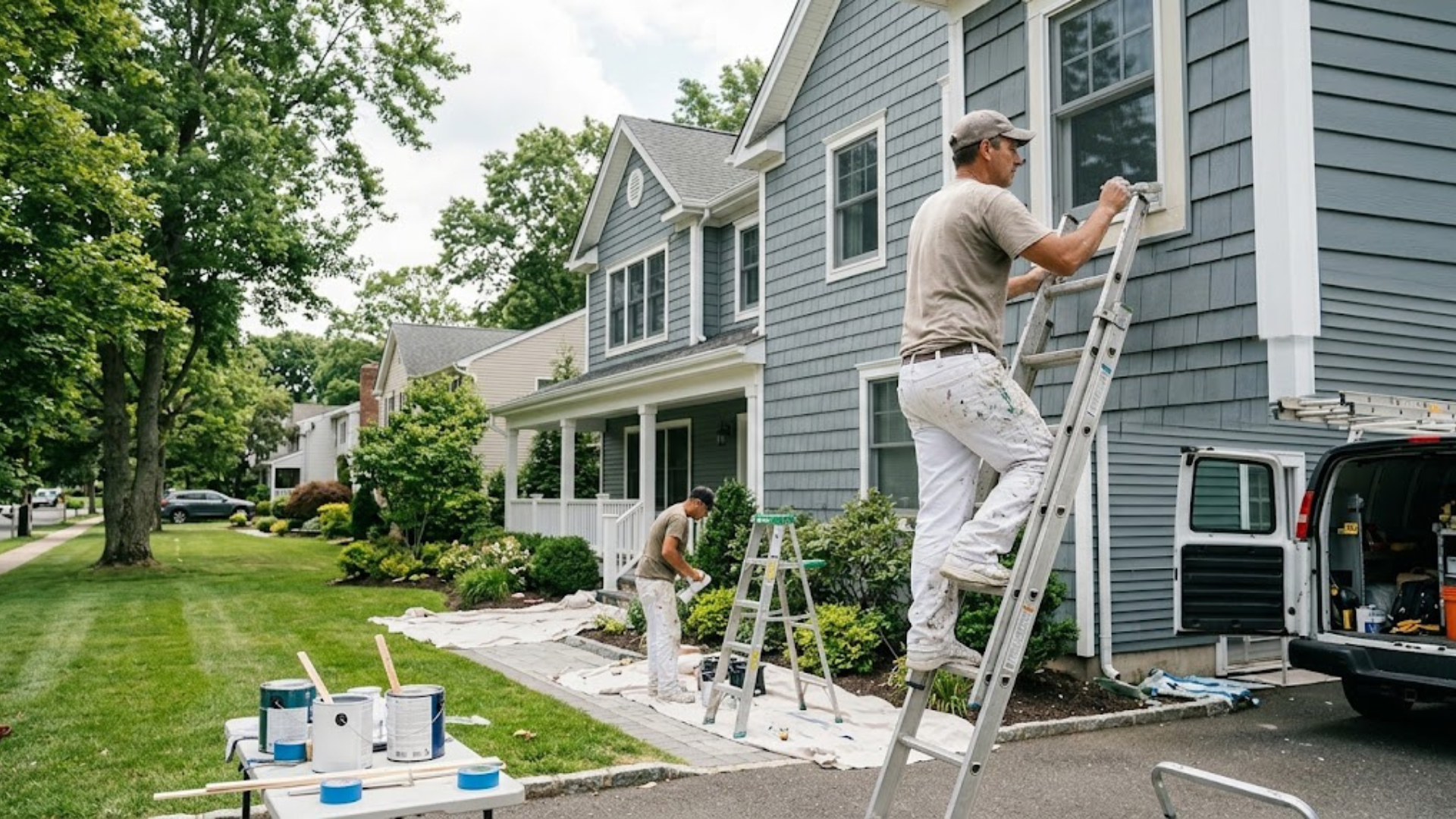
Structural Prep and Surface Restoration: Workers complete pressure washing, caulking, and spackling first. Hence, every substrate achieves full coating adhesion before painting begins.
Interior vs. Exterior Commercial Painting: Materials and Application Matrix
Selecting the correct paint chemistry is crucial. Specifically, each architectural surface faces distinct environmental stresses. The matrix below outlines professional coating recommendations:
| Application Area | Primary Environmental Threats | Recommended Coating Type | Ideal Sheen / Finish | Expected Lifespan |
| Executive Offices & Meeting Rooms | Scuffs, handprints, lighting glare | Low-VOC 100% Acrylic Latex | Matte / Eggshell | 5–7 Years |
| Corridors, Lobbies & Breakrooms | Heavy foot traffic, abrasive cleaning, spills | Scuff-Resistant Acrylic Enamel | Satin / Semi-Gloss | 3–5 Years |
| Exterior Masonry & Stucco | Wind-driven rain, UV exposure, salt air | Elastomeric Waterproof Coating | Flat / Satin | 7–10 Years |
| Exterior Metal Trims & Railings | Rust, oxidation, thermal expansion | Direct-to-Metal (DTM) Acrylic/Epoxy | Gloss / Semi-Gloss | 4–6 Years |
Minimizing Downtime: Flexible Scheduling for Active Businesses
Facility managers must avoid operational interruptions. Unplanned downtime leads to lost revenue. Therefore, professional contractors structure their painting schedules around normal business routines.
After-Hours and Weekend Crew Deployment
Experienced commercial painters work during non-peak business hours. Consequently, the loudest prep tasks happen over weekends or overnight. First, crews cover computer equipment and office desks with plastic. Next, they paint and clean the space thoroughly. Finally, they reset furniture before the morning workday starts. As a result, business operations continue without delay.
Phased Zone-by-Zone Painting
Large complexes benefit from a staged approach. Contractors divide the work area into isolated zones. For example, painters complete one floor before moving to the next. In the meantime, employees shift temporarily to open rooms or work remotely. Thus, workflow remains steady across every department.
Health, Safety, and Air Quality: The Shift to Low-VOC and Zero-VOC Paints
Modern painting practices prioritize indoor air quality. Traditional paints release volatile organic compounds into the room. In turn, these chemical vapors cause headaches and eye irritation. Such airborne irritants decrease employee concentration and morale.
Fortunately, modern commercial paints solve this health concern. Professional contractors utilize zero-VOC and ultra-low-VOC products. In fact, these advanced paints cure quickly without chemical odors. Furthermore, they fulfill strict OSHA safety standards. They also earn points toward valuable green-building certifications. Because off-gassing is eliminated, teams can re-enter treated rooms the following morning safely.
Key Commercial Sectors Served Across Ocean County
Different commercial sectors demand specialized surface solutions. Hence, professional contractors adapt their procedures to each industry:
-
Medical & Healthcare Clinics: Technicians apply specialized antimicrobial wall coatings. Consequently, these walls withstand clinical cleaning solutions and inhibit surface bacteria growth.
-
Legal, Financial & Corporate Suites: Painters apply low-sheen, neutral color schemes. Thus, these executive spaces achieve balanced acoustic control and visual elegance.
-
Flex-Space & Tech Hubs: Contractors spray open ceilings in matte finishes. In addition, they apply writable dry-erase wall paints for collaborative meeting spaces.
-
Commercial Property Associations: Crews maintain visual uniformity across multi-tenant office parks. As a result, the entire park preserves strong leasing appeal.
The Professional Painting Process: From Walkthrough to Final Punch List
High-quality results depend on a disciplined execution plan. Accordingly, commercial painters follow a multi-step project cycle.
Site Inspection and Substrate Assessment
The project begins with an on-site physical evaluation. First, estimators inspect wall substrates with electronic moisture meters. Next, they verify surface adhesion on older paint layers. In addition, technicians search for hidden water leaks. Identifying these root issues early prevents premature paint failure.
Rigorous Surface Preparation
Surface preparation constitutes seventy percent of paint longevity. To begin, crews pressure-wash exterior surfaces to remove salt crusts. Next, they scrape off loose, flaking layers. Then, technicians caulk exterior seams and patch interior drywall cracks. Finally, they apply specialized barrier primers over bare patches. Therefore, the topcoat adheres securely.
Precision Application & Quality Walkthrough
Painters spray, roll, and brush the paint with exact film thickness. Consequently, walls receive uniform coverage and sharp edge lines. After drying, managers conduct a detailed punch-list inspection. They examine the entire facility alongside the property owner. Work concludes only after every single specification meets commercial quality benchmarks.
How to Choose the Right Commercial Painting Contractor in Ocean County
Selecting an experienced commercial painter safeguards your operational capital. Therefore, verify these essential contractor qualifications before signing a contract:
-
Commercial Insurance and Licensing: Confirm active New Jersey commercial registration. In addition, require at least $2 million in commercial general liability insurance and active workers’ compensation.
-
Local Ocean County Portfolio: Review past commercial work completed in Ocean County. Specifically, look for successful projects in Toms River, Lakewood, and Point Pleasant.
-
Detailed Scope of Work: Demand a written contract specifying surface prep methods. Furthermore, insist on designated brand names, specific paint types, and exact coat counts.
-
Safety Compliance: Verify that painters maintain OSHA safety certifications. Moreover, ensure crew leaders are fully trained in aerial lift and scaffolding operation.
Maximizing Your Return on Investment with Routine Maintenance Plans
Paint is a protective shield, not just an aesthetic finish. When a paint film cracks, coastal moisture penetrates the wall frame. Consequently, framing materials rot, and structural repairs become very expensive.
To avoid costly remediation, establish a proactive maintenance plan. For instance, wash exterior facades twice a year to clear away corrosive ocean salt. In addition, schedule annual paint touch-ups for busy hallways and doorframes. These small preventive measures extend the lifespan of a full repaint by several years. Ultimately, an ongoing maintenance plan preserves commercial property value across Ocean County.
Other Post:
Exterior Commercial Painting Near Me: Why Choosing the Right Contractor Matters
Ocean County Commercial Painting Contractor: Red Flags to Watch Out For
The Cost of Commercial Painting Projects in NJ: What Business Owners Should Know