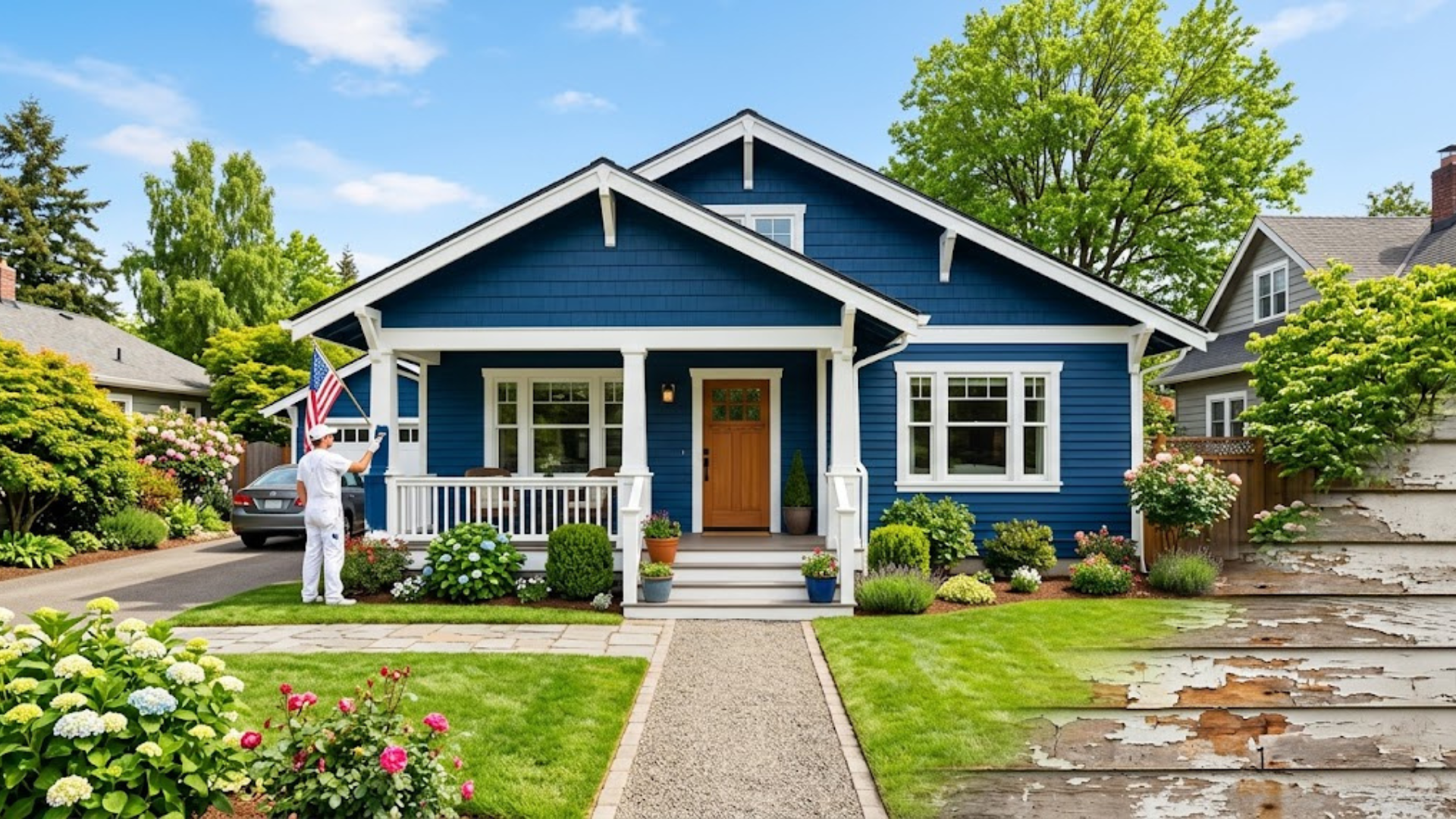
Most homeowners treat a fresh coat of paint as an aesthetic upgrade—a way to boost curb appeal or modernize an outdated exterior. While a stunning facade certainly adds market value, viewing paint merely as cosmetic misses its primary engineering purpose. In building science, paint is your home’s first line of physical defense against the elements. It serves as a protective membrane between vulnerable structural materials and aggressive weather conditions.
Neglecting this protective film rarely results in just a dull appearance. Left unaddressed, failed paint allows microscopic damage to infiltrate siding, framing, and masonry, eventually snowballing into five-figure structural renovations. By understanding how proactive exterior painting prevents home repairs, you can safeguard both your property’s structural integrity and your long-term maintenance budget.
The Shield Effect: How Quality Paint Stops Moisture Intrusion
Water is the single most destructive force acting upon residential structures. When paint ages, it becomes brittle, developing microscopic hairline fractures. These micro-cracks act like capillary straws, drawing wind-driven rain, morning dew, and ambient humidity straight into the building envelope. Once moisture penetrates beneath the paint film, it becomes trapped, accelerating subterranean decay long before visible damage surfaces indoors.
Preventing Destructive Wood Rot on Fascia and Siding
-
Fascia and Soffits: Roof runoff frequently splashes onto eaves. High-grade acrylic paint seals end-grain fibers against sponge-like absorption.
-
Window Sills and Door Jambs: Horizontal ledges collect pooling water; specialized topcoats stop water from rotting sill corners and framing studs.
-
Siding Lap Joints: Sealed overlaps prevent capillary action from drawing moisture upward into interior wall cavities.
Eliminating Mold, Mildew, and Deep Wall Seepage
-
Fungicidal Additives: Premium exterior coatings contain biocide agents that halt spore germination on shaded walls.
-
Insulation Integrity: Keeping wall substrates dry prevents inner fiberglass and cellulose insulation from compacting and losing thermal resistance.
-
Indoor Air Quality: Stopping external moisture infiltration eliminates damp drywall environments that nurture hazardous black mold.
Blocking the Elements: Defense Against Extreme UV and Thermal Stress
Sunlight silently degrades your home through intense ultraviolet (UV) radiation. Bare wood, vinyl, and fiber cement are prone to photodegradation; UV rays break down lignin in wood and strip plasticizers from vinyl. Over time, unshielded materials dry out, become brittle, warp, and cup.
Quality exterior house paints incorporate reflective pigments and flexible acrylic binders designed to withstand intense thermal cycling. On a typical summer day, siding heats up and expands under direct sunlight, then rapidly contracts as evening temperatures drop. Elastic paint formulations stretch and retract alongside the substrate, preventing thermal cracking and preserving the moisture seal year-round.
Cost Comparison: Routine Painting vs. Emergency Structural Repairs
Postponing an exterior paint job might feel like short-term savings, but building maintenance data consistently reveals that deferral invites exponential expense. Repairing compromised structural framing, replacing rotten sub-fascia, and remedying mold cost significantly more than routine repainting.
| Maintenance vs. Neglect Scenario | Typical Estimated Cost Range | Average Lifespan / Timeline | Major Structural Risks Avoided |
| Routine Exterior Repaint (Whole House) | $3,000 – $7,500 | 7 to 10 Years | Surface erosion, siding degradation, moisture traps |
| Siding Replacement (Full/Partial) | $10,000 – $25,000+ | Immediate emergency | Warped panels, sub-wall rot, structural decay |
| Structural Wood Rot Remediation | $2,500 – $9,000+ | Unplanned repair | Sagging eaves, damaged roof decking, compromised framing |
| Pest Infestation Repair (Termite/Ant) | $3,000 – $8,500+ | Emergency response | Hollowed structural studs, failed window framing |
Investing in timely exterior painting delivers an immediate return on investment by eliminating the risk of compounding emergency repairs.
Keeping Wood-Boring Pests and Insects at Bay
Insects do not attack sound, properly sealed materials; they seek easy entry points. Peeling, cracked paint allows moisture to soften exterior wood, creating the exact habitat carpenter ants, termites, and wood-boring beetles require for nesting.
A continuous paint barrier hardens the surface and seals hairline seams around trim boards, eliminating chemical scent trails and physical entry gaps. Termites cannot chew through resilient, cured acrylic or elastomeric coatings to reach dry wood, effectively neutralizing pest infestations before they undermine load-bearing members.
Preserving Masonry and Concrete: Mitigating Freeze-Thaw Cracking
Stucco, concrete, and brick mortar are inherently porous. During rainy seasons, these masonry surfaces soak up ambient moisture. In colder climates, winter temperatures trigger the destructive freeze-thaw cycle: trapped water expands by roughly 9% upon freezing, generating internal hydraulic pressures that crack mortar and cause brick spalling.
Specialized elastomeric and masonry coatings provide a breathable, waterproof skin. They repel liquid water from entering exterior surfaces while remaining vapor-permeable, allowing internal household humidity to escape without blowing the paint off the wall.
6 Clear Red Flags Your Home Needs Repainting Immediately
Catching degradation early saves thousands on substrate repairs. Inspect your perimeter annually for these six warning signs:
-
Chalking: A chalky, powdery residue on your fingers when swiping siding, indicating that UV light has broken down the paint’s binder resins.
-
Alligatoring: Deep, scaly fissures resembling reptile skin, indicating brittle lower paint layers are losing elasticity.
-
Caulk Separation: Dry, cracked, or missing caulking joints around door casings, corner boards, and window perimeters.
-
Efflorescence: Crusty white salt deposits surfacing on brick or stucco, confirming active water movement through the wall.
-
Blistering and Bubbling: Raised bubbles in the paint film, proving that moisture is actively escaping from the substrate beneath.
-
Faded, Dull Patches: Localized bleaching from solar exposure, signaling that water-repellent polymers have worn thin.
Siding-Specific Protection: Wood, Fiber Cement, and Vinyl
Every siding material requires tailored paint chemistries to maximize protection:
Natural Wood and Cedar Siding
-
Oil-Based Primers: Penetrate deeply into wood pores, locking down natural tannins to prevent bleed-through discoloration.
-
End-Grain Sealing: Essential for preventing the bottom edges of lap siding from swelling and splitting.
-
100% Acrylic Latex: Maintains sufficient breathability so wood can regulate internal humidity naturally.
Stucco and Fiber Cement
-
Elastomeric Formulations: High-build elasticity stretches across dynamic hairline fractures common in settling stucco.
-
Alkali-Resistant Primers: Neutralize high pH levels present in cured concrete and cement-based siding to prevent coating burn.
Maximizing Paint Lifespan: Critical Prep Work That Saves Thousands
A paint job is only as durable as the preparation beneath it. Applying premium paint over a dirty, decaying surface guarantees premature coating failure within two years.
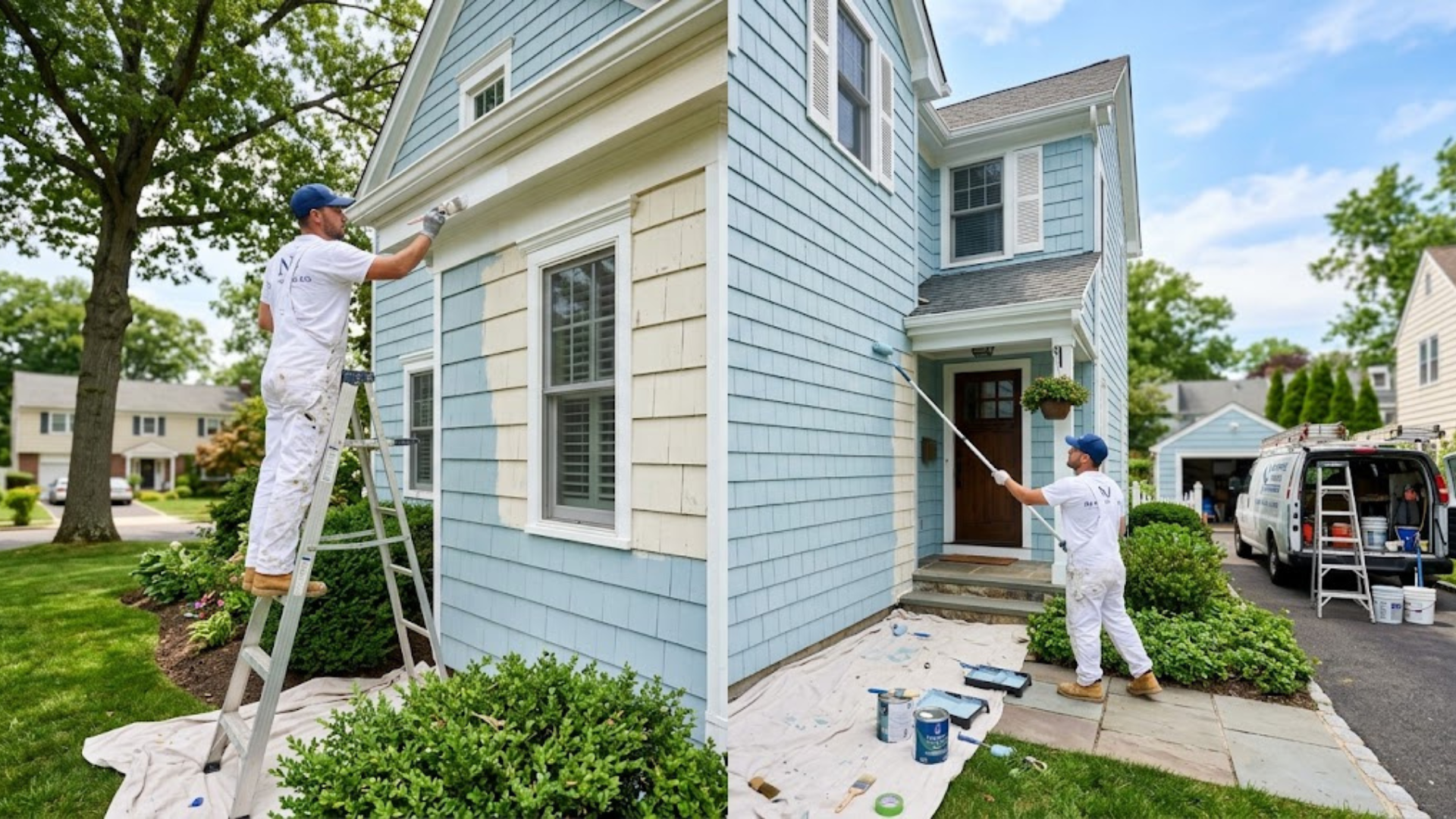
Professional prep begins with power washing using eco-friendly fungicides to strip away chalking residues, dirt, and mold spores. Next comes mechanical scraping and sanding of loose edges down to a feathered, stable transition. Technicians then apply high-grade polyurethane or elastomeric caulk along seams, corner posts, and trim joints to seal vulnerable entry points. Finally, bare substrate areas are spot-primed to create a uniform, adhesive anchor before two complete topcoats are applied.
The Smart Homeowner’s Maintenance Cycle: When to Inspect and Repaint
As a general rule, exterior wood surfaces require repainting every 5 to 7 years, fiber cement every 8 to 12 years, and quality masonry or stucco every 7 to 10 years depending on sun and storm exposure.
Schedule a walking inspection of your perimeter twice a year—ideally in spring and autumn. Look closely at corners, roof-drip splash zones, and southern exposures. Addressing minor flaking and seam cracking immediately keeps water out, preserves your home’s structural framing, and turns a minor weekend upkeep task into thousands of dollars in averted structural repairs.